
What Are Sticky Wilds and How Do They Affect Slot Features?
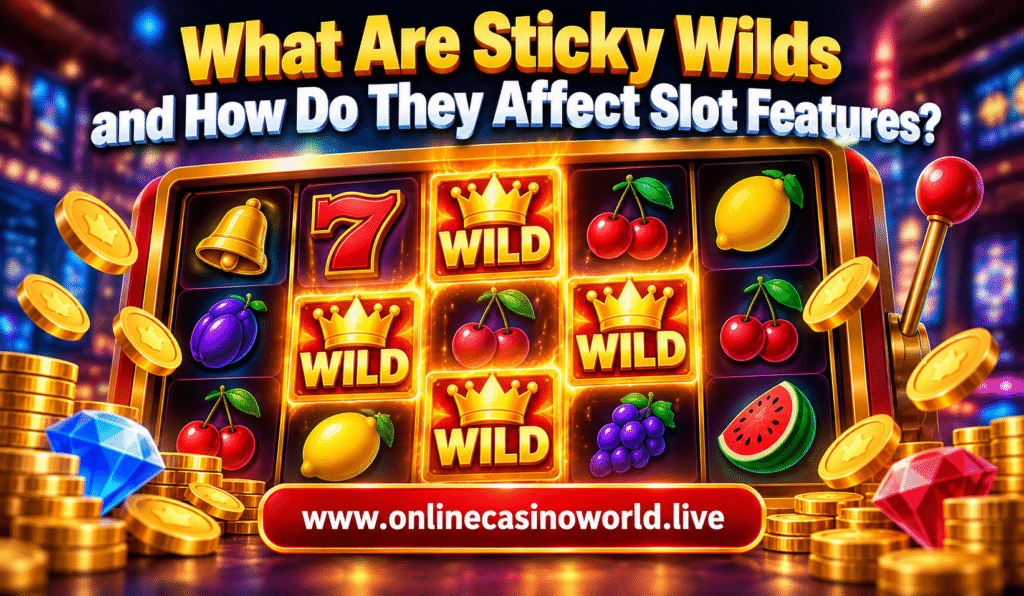
Sticky wilds are special symbols in modern slot games that remain in their positions for multiple spins or throughout a designated bonus feature. Unlike ordinary wild symbols, which usually disappear when a spin finishes, sticky wilds continue participating in eligible combinations during later spins.
Wild symbols generally substitute for selected regular symbols to help complete winning combinations. When a wild becomes sticky, its ability to substitute can remain active while other positions continue spinning. This creates a changing reel arrangement in which previously collected wilds may influence several consecutive results.
Sticky wilds commonly appear in free spins, respin rounds, and other special features. Their exact behaviour depends on the individual game’s rules, including how long they remain locked, whether they can carry multipliers, and whether additional wilds can join them.
Understanding sticky wilds helps readers explore modern slot mechanics more clearly. Although these symbols can change the way a bonus round develops, they do not guarantee winning combinations or ensure that a game returns more than the amount wagered.
How Sticky Wilds Work
The basic mechanic begins when a qualifying wild symbol lands during a spin or an activated feature. Instead of disappearing after the result is evaluated, the symbol remains locked in its original position.
On subsequent spins, the other eligible reel positions continue changing, but the sticky wild stays where the game rules require it to remain. It can participate in new winning combinations whenever the relevant symbol pattern qualifies.
For example, imagine a five-reel slot with a sticky wild locked on the third reel during a free-spins round. On the next spin, matching symbols appear on the first, second, fourth, and fifth reels. If the game’s rules recognize that arrangement as a winning combination, the locked wild may help complete it.
If another wild appears and also becomes sticky, the number of locked positions can increase. This may change the combinations available on later spins.
However, not every wild symbol becomes sticky automatically. Some games activate the effect only during specific bonus rounds, while others require a particular trigger or symbol arrangement. The paytable explains which conditions apply.
Sticky Wilds Compared With Regular Wilds
Regular wilds and sticky wilds share a substitution function, but their duration is different.
A standard wild generally contributes to the result of the spin on which it appears. After the game evaluates the outcome, the symbol normally disappears when the next spin begins.
A sticky wild remains in place for a defined period. It might last for one additional respin, a fixed number of spins, or the entire duration of a bonus round.
This persistence means the same wild can participate in several separate evaluations. Its continuing presence changes the reel arrangement, although it does not guarantee that matching symbols will appear in the necessary positions.
The distinction also affects how developers design bonus features. Regular wilds typically contribute to individual outcomes, whereas sticky wilds can influence a sequence of results by preserving particular positions.
Players should not assume that every sticky wild works identically. Some titles restrict sticky wilds to particular reels, and others combine them with additional rules that change their substitution behaviour.
Sticky Wilds During Free Spins
Free spins are one of the most familiar settings for sticky wild mechanics. A game may award free spins after a qualifying combination of scatter symbols or another specified trigger.
During the bonus round, wild symbols that land may remain locked until the feature ends. As the spins continue, more wilds can sometimes accumulate on the grid.
The position of each wild matters because slot games evaluate combinations according to their individual rules. A wild placed where it helps complete a qualifying pattern may contribute to a payout, while another wild might not produce a win on a particular spin.
Some games also allow additional free spins to be awarded during the feature. When retriggers are permitted, the bonus round may continue for longer than initially expected. Whether existing sticky wilds remain locked during the additional spins depends on the game’s rules.
The main purpose of this design is to create continuity between successive spins. Instead of resetting every symbol position completely, the feature preserves selected wilds and allows the remaining reels to change around them.
Sticky Wilds and Respin Features
Sticky wilds can also appear in respin mechanics. A respin gives the game another spin under specific conditions, often while one or more symbols remain locked.
For example, a game may lock a wild symbol when it lands and respin the other reels. The locked symbol remains in place while the remaining positions produce a new arrangement.
Some features award additional respins when another qualifying symbol appears. Others use a fixed number of attempts or end when a particular condition is satisfied.
These mechanics can resemble Hold-and-Win features, but the rules are not always identical. Hold-and-Win games commonly focus on collecting special symbols or displayed values, while sticky wild respins emphasize wild symbols that can substitute for regular icons.
Individual releases may combine these concepts, so the feature name alone is not enough to determine how it operates. Checking the game’s instructions helps clarify the trigger, respin counter, and conditions for ending the round.
Different Types of Sticky Wilds
Developers can combine the sticky property with other symbol behaviours to create several variations.
Standard sticky wilds remain locked in a position for a specified period and continue substituting for eligible symbols.
Sticky expanding wilds can expand to cover a larger part of the reel and then remain in that expanded state when the rules permit it. This combines the coverage of an expanding wild with the persistence of a sticky wild.
Sticky multiplier wilds include a multiplier that affects eligible wins according to the game’s instructions. The multiplier may apply to a particular combination or operate under a specific bonus condition.
Progressive sticky wilds describe features in which additional wilds can accumulate across successive spins. The exact progression and duration depend on the title.
These categories are descriptive rather than universal standards. One game might combine several properties, while another might offer only a basic sticky wild feature.
Understanding the differences helps readers avoid assuming that every sticky wild expands, multiplies payouts, or remains locked for the same duration.
How Sticky Wilds Affect Winning Combinations
Sticky wilds can change which combinations are possible because they preserve substitute symbols between spins. When other positions change, the existing wilds remain available to contribute to qualifying patterns.
In a payline slot, a sticky wild may help complete a line when matching symbols land elsewhere along that route. In a ways-to-win game, it may contribute to combinations across consecutive reels. Cluster-based games can use wilds differently, depending on whether the symbols can substitute within connected groups.
The game determines which combinations qualify and how much each one pays. A sticky wild cannot automatically turn every arrangement into a win, and it may be unable to replace scatter symbols or other special icons.
The number of wilds on the screen also does not determine the final payout by itself. Their positions, the symbols produced on other reels, and the game’s payout rules all influence the result.
Players should consult the paytable to understand whether sticky wilds contribute to regular combinations, bonus awards, or both.
Multipliers and Special Bonus Rules
Some slot games attach multipliers to sticky wilds or to the bonus rounds in which they appear. A multiplier changes an eligible payout by a specified factor, subject to the game’s calculation rules.
For instance, a hypothetical feature might apply a two-times multiplier to qualifying wins involving a designated wild. Another game might increase a multiplier after successive winning spins or activate it only after a special symbol appears.
These rules can make bonus rounds more complex, which is why the information screen matters. A multiplier displayed on a symbol may not apply to every win, and some multipliers operate only during particular features.
Sticky wilds can also interact with cascading reels. If a winning combination disappears and new symbols fall into place, locked wilds may remain available during the next evaluation if the game’s rules allow it.
The combination of persistent symbols, multipliers, and cascades can create several stages of gameplay within one feature. Nevertheless, the outcome remains uncertain, and the presence of multiple mechanics does not guarantee a larger reward.
Understanding RTP and Volatility
Return to player, commonly known as RTP, is a theoretical percentage describing how much a game is designed to return across a very large number of wagers. It is not a prediction of what an individual player will receive.
Volatility describes the general distribution of payouts. A game may produce smaller wins relatively frequently or feature less frequent outcomes with greater variation in size.
Sticky wilds do not automatically increase a game’s RTP. Their impact depends on the complete mathematical design, including the frequency of the feature, the distribution of symbols, and the payout rules.
Two games with sticky wilds can therefore produce very different experiences. One may use the mechanic in a relatively simple bonus, while another may combine it with multipliers and additional spins.
Players should compare the published game information instead of assuming that more sticky wilds mean better results. No particular arrangement guarantees a payout.
Responsible Considerations
Sticky wilds can make slot gameplay visually engaging because symbols remain on screen while the rest of the reels change. However, this sense of continuing progress should not be confused with a reliable way to predict future results.
A wild that remains locked does not guarantee that another winning combination will form. Previous losses also do not make a future win more likely.
Anyone choosing to play where legally permitted should establish spending and time limits before beginning. Gambling should be treated as entertainment rather than a source of income, and money needed for essential expenses should not be used for wagers.
Players should follow local laws, age requirements, and platform rules. If gambling begins affecting finances or everyday wellbeing, taking a break and seeking appropriate support may be important.
Conclusion
Sticky wilds are special wild symbols that remain in place across multiple spins or throughout a defined feature. By preserving substitute symbols, they change the reel arrangement and can influence winning combinations during free spins, respins, and other bonus rounds.
Their behaviour varies between games. Some remain locked for a fixed period, while others interact with expanding reels, multipliers, cascading mechanics, or additional spins. The paytable explains the specific conditions and payout rules.
For readers learning about modern slot features, understanding sticky wilds provides a clearer picture of how developers create continuity between spins. However, these symbols do not guarantee wins or establish that a game offers better mathematical value. Knowing the rules, recognizing the role of chance, and maintaining responsible limits remain essential.