Keno vs Bingo and the Differences in Number-Based Casino Games
Number-based games have remained popular because they are easy to understand and do not require complicated card combinations or detailed gaming knowledge. Keno and Bingo are two familiar examples. Both involve randomly drawn numbers, matching results, and the possibility of winning a prize. However, their rules, objectives, pace, and payout structures make them different experiences.
For readers of OnlineCasinoWorld.live, understanding these differences can make it easier to recognize how each game works before exploring its rules. Although Keno and Bingo share similar visual features, they use different methods to determine winning outcomes. This guide explains their basic mechanics, number selection, winning conditions, and important considerations for beginners.
What Is Keno?
Keno is a number-drawing game in which players usually select numbers from a larger numbered field before a draw begins. A common casino version uses numbers from one to eighty, although other versions may use different number ranges and drawing rules.
Players choose a specified number of selections, often called spots. After the selections are confirmed, the game draws a predetermined number of results. The player’s ticket is then compared with the drawn numbers to determine how many selections match.
For example, a player might select six numbers. If four of those numbers appear in the draw, the game checks the applicable paytable to determine whether that result qualifies for a payment.
The number of matches is central to the outcome. Some tickets pay for particular match counts, while others require more successful matches. The exact conditions depend on the selected game’s rules.
Keno is available in physical casino environments and digital formats. Online versions may complete a round quickly, displaying the selected numbers, drawn results, and final outcome on the screen.
What Is Bingo?
Bingo is another number-based game, but its objective generally involves completing a particular pattern on a card. Players receive cards containing prearranged numbers, and a caller or digital system announces numbers drawn randomly.
Whenever a called number appears on a player’s card, the corresponding space is marked. The objective depends on the active game, which might require a horizontal line, a particular shape, several completed lines, or a full card.
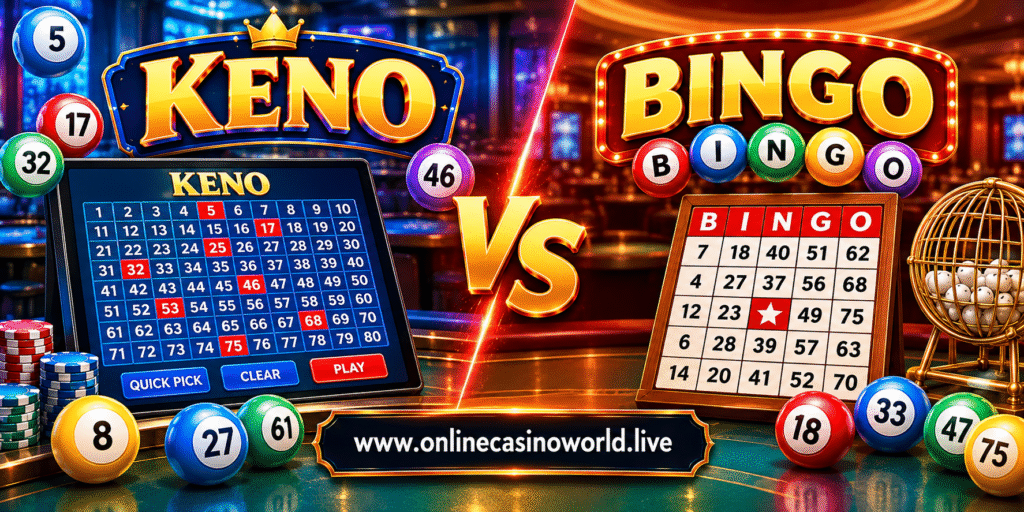
In a common American 75-ball version, the card contains a five-by-five grid with the letters B-I-N-G-O across the top. The centre space is usually free, while the remaining spaces contain numbers from designated ranges.
Other formats include 90-ball Bingo, which uses different cards and winning patterns. Consequently, the number of balls, card design, and winning conditions vary according to the version.
Bingo can be played in community halls, dedicated online rooms, and casino entertainment environments. Its combination of number matching and pattern completion distinguishes it from standard Keno.
The Main Difference Between Keno and Bingo
The biggest difference concerns how the player’s selections are evaluated.
In Keno, players generally select numbers before the draw and receive results based on the number of selections that match. A paytable determines whether the result wins and how much it pays.
In Bingo, players usually receive a card containing predetermined numbers. They mark matching numbers as they are announced and attempt to complete the required pattern.
Consider a simple example. A Keno player selects five numbers and matches three drawn results. The game evaluates those three matches according to its payout schedule. A Bingo player might also mark three numbers, but those matches alone do not necessarily complete the required line or pattern.
Therefore, matching numbers does not have the same meaning in both games. Keno focuses primarily on qualifying match counts, while Bingo focuses on completing a specified card pattern.
How Number Selection Works in Keno
Keno gives players more direct involvement in choosing the numbers on their ticket. Depending on the version, they may select a small group or a larger number of spots from the available field.
Some players choose birthdays, favourite numbers, or other personally meaningful combinations. Others use automatic selection features that generate numbers randomly.
However, personal number choices do not make a particular combination more likely to appear in a fair random draw than another combination of the same size. Choosing numbers manually changes the ticket, not the underlying probabilities.
The number of spots selected can affect the possible match outcomes and the payout schedule. A ticket with several selected numbers may have a different distribution of results from a ticket with only a few selections.
Before playing, beginners should review how many numbers can be selected, how many are drawn, and which match counts qualify for payments.
How Bingo Cards and Patterns Work
Bingo begins with a card rather than a player-selected list of individual numbers. Each card contains a particular arrangement, and the game identifies which pattern players must complete.
A horizontal line may require every space in one row to be marked. A diagonal pattern uses spaces running across the card, while a four-corners game requires the relevant corner spaces to be matched. A full-house game generally requires all numbered spaces to be covered.
Not every Bingo session uses the same objective. The pattern is normally established before play begins, so players must understand the winning condition rather than simply counting how many numbers they have marked.
Some games award prizes to the first qualifying card, while others may distribute prizes according to predefined rules. If multiple players complete the winning condition together, the settlement depends on the specific game’s procedures.
Knowing the pattern is therefore just as important as following the called numbers.
Understanding the Pace of Each Game
Keno often has a relatively short round structure. Players choose their numbers, confirm a stake, wait for the scheduled draw, and receive the result. Some electronic versions can complete this sequence in less than a minute.
Bingo usually follows the pace of the number calls. The game continues until the required pattern is completed or another specified stopping condition is reached. A simple line may appear sooner than a full-card result, although the actual duration depends on the game and the number of participating cards.
Online platforms can change the experience further. Automated Keno draws may happen quickly, while live Bingo sessions may involve a host, multiple participants, and a more gradual sequence of calls.
Neither game has a universal duration. The particular format and operating rules determine how quickly a round finishes.
Keno Payouts and Bingo Prizes
Keno generally uses a paytable. The table explains how much a particular ticket result returns based on the number of selections made, the number of matches, and the stake.
A larger number of matches may qualify for a higher payout, but the relationship between matches and rewards is not identical across all versions. Some results may pay nothing, while others receive fixed amounts or multipliers.
Bingo commonly uses prizes associated with a particular game or session. In many formats, prizes are funded through ticket sales or established prize arrangements. The distribution can depend on the operator, the rules, and the number of qualifying winners.
This means the two games should not be evaluated using the same payout assumptions. Keno requires attention to the paytable, while Bingo players should understand the prize structure and winning conditions.
A high advertised prize does not establish that a game offers favourable value. The chance of qualifying, the amount spent, and the specific terms all matter.
Probability and Random Results
Both Keno and Bingo depend on random number selection. Players may recognize patterns in previous results, but past draws do not reliably predict future outcomes in a properly randomized game.
For example, a Keno number that has not appeared recently is not automatically more likely to appear next time. Similarly, a Bingo card containing several numbers that have already been called is not guaranteed to complete its pattern before another card.
The probability of a particular result depends on the game’s mathematical structure. Keno involves the number of selected spots and the draw rules, while Bingo involves card arrangements, number calls, and the active pattern.
Players should avoid systems that claim to guarantee wins or recover previous losses. Understanding probability helps explain possible outcomes, but it cannot remove uncertainty from these games.
Playing Keno and Bingo Online
Online Keno usually provides a numbered board, selection controls, a stake selector, and a display showing the draw. Some platforms include automatic number selection, allowing players to generate a ticket without choosing each number manually.
Online Bingo commonly displays the card and marks matching numbers automatically. Depending on the platform, games may feature scheduled sessions, multiple cards, automated number calls, or live hosts.
Before using an online service, check the rules, payout information, licensing details, and local legal requirements. Make sure the platform clearly explains how results are determined and how prizes are awarded.
A free demonstration mode, when available, can help users understand the interface without risking money. Practice can improve familiarity with the controls, but it does not improve the randomness of the draw.
Common Mistakes Beginners Should Avoid
One common mistake is assuming Keno and Bingo are interchangeable because both use numbered grids. Their winning conditions are different, and understanding the correct objective is essential.
Another mistake is choosing numbers based on the belief that previous draws reveal a reliable pattern. Random outcomes do not follow personal predictions, and favourite numbers provide no guaranteed advantage.
Players may also overlook payout conditions. In Keno, matching several numbers does not necessarily mean a ticket qualifies for payment. In Bingo, marking many spaces does not guarantee a win unless the required pattern is completed.
Finally, playing too quickly or purchasing more tickets than intended can increase spending. Setting a clear limit before beginning helps keep entertainment costs under control.
Which Game Is More Suitable for Beginners?
Keno may appeal to people who prefer choosing their own numbers and receiving a result after a defined draw. Its basic sequence is easy to follow, and players can learn how selected spots relate to the payout table.
Bingo may suit people who enjoy tracking a card, following number calls, and completing patterns. Its social formats can also create a different atmosphere from individual Keno rounds.
Neither game is universally better. The choice depends on personal preferences, the rules of the available version, and how much time a player wants to spend following each round.
Beginners should focus on understanding the game rather than searching for a method that guarantees a win.
Responsible Play and Final Thoughts
Keno and Bingo share the basic idea of matching numbers, but their structures differ. Keno generally involves selecting numbers and comparing them with a completed draw. Bingo uses prearranged cards, called numbers, and specific patterns that determine winning results.
Keno payouts are typically determined by a paytable, while Bingo prizes depend on the session’s rules and prize arrangements. The games can also differ in pace, card design, number selection, and the way players follow each round.
For OnlineCasinoWorld.live readers, learning these distinctions provides a useful starting point for understanding number-based games. Always review the specific rules, payout information, and eligibility requirements before participating.
Only adults who are legally permitted to gamble should consider real-money play. Set a firm entertainment budget, avoid chasing losses, and never use money needed for essential expenses. Both games involve uncertainty, and no number-selection method guarantees a profitable result. Understanding the rules supports informed choices, but responsible limits remain essential.